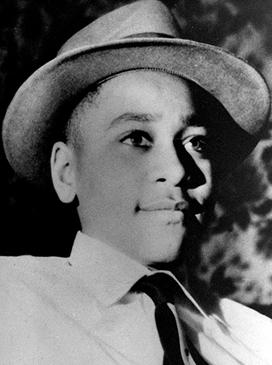
What did Emmett Till look like after being lynched? Information we know about his injuries
The fate of Emmett Till would later spark the American civil rights movement in 1955 after cashier Carolyn Bryant Donham, now 87, accused the 14-year-old of inappropriate advances and attacks in his grocery store.
The horrific act of killing the 14-year-old black boy from South Chicago, Illinois, who was visiting loved ones in Money, Mississippi, came as a result of the charge.
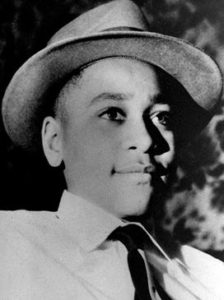
Issue up to
After being lynched, what happened to Emmett Till’s face? injuries
On August 28, 1955, early in the morning, Roy Bryant, the cashier’s husband, and JW Milam, her brother-in-law, broke into the house and took Emmitt hostage.
Wheeler Parker and Simeon Wright, Till’s two cousins, testified as eyewitnesses that Till was held at gunpoint while inside the house at the time of the shooting. ‘removal. His great-uncle informed the local police of his nephew’s abduction the next day.
Emmett was beaten and stripped naked by Bryant and Milam, who also forced me to carry a cotton gin fan weighing over 75 pounds to the bank of the Tallahatchie River. This resulted in multiple injuries and the deformation of Emmett’s face. Till’s eyes were gouged out and he was shot by the two brothers. Since they still had work to do, they opted to use barbed wire to tie him to a metal fan before throwing his body parts into the river. Emmett’s entire body was deformed, and the only thing that could be used to identify the body for his family was the signet ring his mother gave him when he left Chicago for Mississippi. The ring belonged to his father, a father he had never met who had perished in World War II.
New developments in the nearly 70-year-old Emmit case
The murderer and others involved have not been brought to justice since 1955. Roy Bryant, the store owner, and his half-brother were not indicted nearly 70 years ago by an all-white grand jury .
After four days of testimony, the jury found no evidence to support the incident and the defendants were free to go after being cleared of all charges. In a television interview, the half-brother, Milam, admitted that they had participated in the kidnapping, killed the boy and threw him in the river.
They are both deceased. To provide a definitive explanation for Till’s murder, the Federal Bureau of Investigation (FBI) revived the investigation in 2004. On August 9, 2022, the Mississippi grand jury issued a similar decision, declining to indict the complainant, Ms. Donhom, whose claim resulted in the lynching of the young black man. Because there was insufficient evidence to support the kidnapping and murder allegations, the jury chose to drop them.
The Impact of Emmett Till’s Murder on the American Civil Rights Movement
The groceries allegations that led to the lynching of black child Emmet Till in August 1955 received widespread attention, particularly among young African Americans who launched civil rights movements in the United States in the purpose of opposing racial violence.
The black community was outraged and feared that such an incident would occur as news coverage of the photographs of the corpse appeared in the media and the murder trial began. At the time, the White and Black populations were still segregated. The terrifying photographs of his corpse were first published in JET Magazine and Chicago Defender before being made public in other media.
Mamie Till Mobley, the mother of Emmett Till, chose to hold an open-air funeral, sparking the civil rights movements. Her only son’s story was covered by mainstream media, which revealed to the world what racial brutality had done to her child. Several thousand people who attended the funeral witnessed the severity and ferocity of the act. Black people therefore felt extremely motivated to fight white supremacy.
Before Emmett was fourteen
On July 25, 1941, a working-class Chicago family welcomes Emmett Till into the world. Grandma often referred to her son by his nickname, Bobo. His son was constantly surrounded and close to their loved ones because his father was never present. Emmett attended the all-black McCosh Elementary School, where he was educated. He was going to high school in the fall of 1955. He was often portrayed as a prankster with lots of jokes he liked to talk about by his classmates and cousins. He had an infectious charm and loved to make people laugh.
When Grandma’s child learned that his cousins were going to Mississippi to spend the summer with his great-uncle, he demanded they go to Nebraska instead because he didn’t want to miss out on the whole summer of fun. with his cousins.
On August 21, 1955, his mother gave him a final kiss as he left with his uncle and his cousins Whiller and Simeon at a train station; nevertheless, the following month, on September 2, he returned bearing mutilated remains. All the black communities who fought for her justice resent that she has not been executed to this day.
